
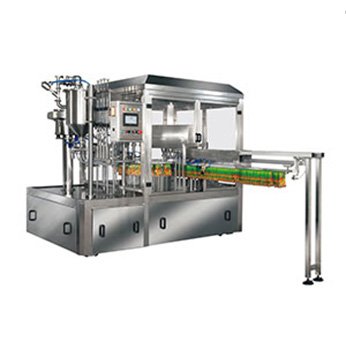

Wide Applications and Limitations of Auger Fillers
In the packaging process of industrial production, Auger Fillers, with their unique working principle, play a crucial role in numerous material packaging scenarios and are a major unit in mechanized transportation work across various industrial and agricultural sectors. They reduce labor intensity and improve work efficiency, and are suitable for horizontal or inclined conveying of powders and granules, mostly used for packaging powders such as flour and protein powder. However, like any piece of equipment, Auger Fillers are not omnipotent. When faced with certain special products, they exhibit significant limitations and may even be completely unsuitable for packaging. Next, we will delve into several typical products that cannot be packaged using Auger Fillers.
Why can’t Auger Fillers package salt and sugar?
Salt and sugar, common in kitchens, are indispensable food ingredients in daily life. When packaging salt and sugar, good sealing is essential to prevent moisture absorption and quality degradation. Simultaneously, the packaging materials should meet food safety standards to ensure they do not chemically react with salt and sugar, contaminating the product.
The working principle of a Auger Filler is based on screw drive. When the motor starts, power is transmitted to the screw, which rotates at high speed within the sealed barrel.
However, mechanical friction is unavoidable during the operation of the Auger Filler. Continuous friction between the screw and the material, and between the screw and the inner wall of the barrel, converts mechanical energy into heat, causing a slight increase in the temperature of both the screw and the material. This heat generation is particularly pronounced during prolonged continuous operation or when conveying large volumes.
Salt and sugar are hygroscopic and readily undergo physical changes when heated. When exposed to the heat generated by the Auger Filler, salt and sugar gradually absorb moisture from the surrounding environment, softening and melting. Sugar, with its relatively low melting point, is more easily transformed from a solid to a liquid state under the frictional heat of the screw. While salt has a higher melting point, it absorbs moisture to form a brine solution, also exhibiting changes in fluidity.
These changes can cause severe material jamming problems within the Auger Filler. As salt and sugar melt or absorb moisture and clump together, they can no longer move smoothly along the screw’s spiral grooves. Instead, they adhere to the screw and the inner wall of the barrel, gradually accumulating and hindering normal material transport. Material jamming not only interrupts the feeding process and reduces packaging efficiency but can also damage equipment and increase maintenance costs. Once jamming occurs, cleaning is cumbersome, requiring machine shutdown and disassembly of parts, consuming significant time and manpower. Furthermore, inaccurate packaging quantities due to jamming can affect product quality and production efficiency, causing economic losses to the company.
Why can’t screw conveyors package laundry detergent?
Laundry detergent, a common washing product, mainly consists of anionic surfactants (such as sodium alkylbenzene sulfonate), nonionic surfactants, additives (phosphates, silicates, sodium sulfate, etc.), enzymes, and fluorescent agents. Among these, the phosphates and silicates in the additives, along with the alkaline chemical properties, make laundry detergent somewhat corrosive.
When a screw conveyor is used to transport laundry detergent, the screw and the inner wall of the barrel are in direct contact with the detergent. The chemical components in laundry detergent react with metal materials, gradually corroding the metal surface. Over time, the corrosion deepens, causing pitting, wear, and even breakage on the screw surface; the inner wall of the barrel also thins and deforms, affecting its sealing and structural stability.
Corrosion not only damages the Auger Filler equipment but also seriously interferes with and poses a potential threat to the packaging process and product quality. During packaging, the corroded screw and barrel produce metal shavings, which may mix into the laundry detergent. This not only affects the appearance of the detergent, making it look impure and reducing the product’s perceived quality, but may also pose a safety hazard to consumers.
Furthermore, corrosion affects the conveying stability and metering accuracy of the Auger Filler. This can lead to inaccurate packaging, either insufficient quantity, causing consumer dissatisfaction and damaging brand reputation, or excessive quantity, increasing production costs and reducing the company’s economic benefits. Simultaneously, frequent equipment downtime due to corrosion also affects production progress, reduces production efficiency, and increases the company’s operating costs.
Alternative Solution: Advantages of Multi-Head Scales
Teflon-plated/316 stainless steel multi-head scales are advanced devices specifically designed for packaging corrosive and temperature-sensitive materials. Their ingenious design consists primarily of multiple independent weighing units, high-precision load cells, a vibrating feeder, a control system, and corrosion-resistant Teflon-plated or 316 stainless steel hoppers and conveying pipes.
During operation, the material is first evenly distributed into the hoppers of each weighing unit by the vibrating feeder. The load cells monitor the weight of the material in each hopper in real time and transmit the data to the control system. The control system uses advanced computer algorithms to quickly analyze and combine the data from each weighing unit, selecting the combination closest to the target weight. Once the optimal combination is determined, the discharge gate of the corresponding hopper opens, and the material falls into the packaging container, completing the precise weighing and packaging process.
For temperature-sensitive materials such as salt and sugar, Teflon-plated/316 stainless steel multi-head scales offer significant advantages. The special materials used in this product offer excellent heat insulation, effectively reducing the impact of external heat on the materials and preventing jamming caused by the melting of salt and sugar. Furthermore, the short contact time between the material and the equipment throughout the packaging process further reduces the possibility of heat transfer. For corrosive materials like laundry detergent, the Teflon coating or 316 stainless steel provides excellent corrosion resistance, protecting against the chemical components in the detergent and ensuring long-term stable operation of the equipment, reducing maintenance and replacement costs.
Features and Applications of Multi-Head Linear Scales
Multi-head linear scales are an important member of the multi-head scale family, exhibiting unique advantages in packaging materials such as salt, sugar, and laundry detergent. Structurally, the weighing units of a multi-head linear scale are arranged in a straight line. This layout allows for smoother material transport and weighing, with a shorter drop height, making it particularly suitable for brittle and fragile products such as salt and sugar, effectively reducing breakage during packaging.
In terms of accuracy, multi-head linear scales are equipped with high-precision weighing sensors and advanced control systems, enabling precise measurement and control of material weight. For salt and sugar packaging, the weighing accuracy can reach ±0.1 grams or even higher, ensuring the accurate weight of each bag and meeting consumer requirements for consistent product weight. When handling laundry detergent, the high precision also ensures stable packaging quantities, preventing inaccurate filling from affecting product quality and corporate reputation.
In terms of speed, multi-head linear scales offer high efficiency. Multiple weighing units work simultaneously, enabling high-speed packaging through rapid material distribution and combination calculations. For example, a common 14-bucket multi-head linear scale can achieve packaging speeds of 60-120 times per minute, significantly improving production efficiency and meeting the needs of large-scale production. Furthermore, the corrosion resistance of multi-head linear scales is also noteworthy. Similar to multi-head scales made of Teflon/316 steel, it uses corrosion-resistant materials in key components to effectively cope with the challenges of corrosive materials such as laundry detergent, ensuring long-term stable operation of the equipment in harsh working environments.