
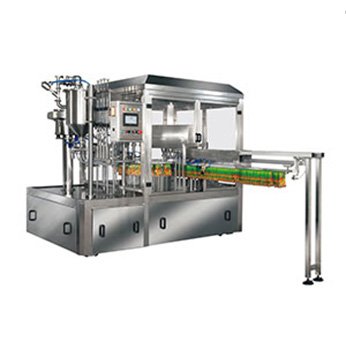

SembsunPack’s Sauces & Condiments Packaging MachinesAutomated sauce packaging machines for condiment brands, co-packers, and artisan producers. Change from filling 25 bottles by hand every hour to processing more than 150 containers every minute.
|
Scale Without More StaffHandle 3-5x more meals with your current workforce. | See ROI in 12-18 MonthsLower labor costs, reduce waste, and increase capacity. | Perfect Seals Every TimeConsistent quality means happier customers and fewer returns. | Food Safety Built-InMeet HACCP and FDA requirements automatically. |
Three Ways Manual Filling Is Costing You Money (That Don’t Show Up On Your P&L)When you consider the actual costs, manual filling appears to be less expensive: You’re Giving Away Free Product: An additional 5 milliliters per bottle swiftly adds up. That’s five liters of sauce you prepared but won’t be compensated for on 1,000 bottles a day. Each and every day. Every Bottle Is Different: Bottles in the morning when the sauce is thin and hot? They come out light and pour quickly. Bottles in the afternoon after everything has calmed down? They become hefty because they are slow and thick. The Mess Is Real Money Leaving Your Line Spills on the floor, sauce on aprons and gloves, it all adds up. You stop production more frequently than you realize, lose product, and spend more time cleaning. |
What Changes With a Professional Condiment Pouch Packing MachineA good sauce or condiment packing machine fixes problems you may not even notice right now: Temperature No Longer Matters: Making hot sauce in the morning at 85°C? cold product in the afternoon at 20°C? The machine makes its own adjustments. The smooth operation is maintained by heated jackets. Chunks Are No Longer an Issue: Have some salsa with bits of tomato? Crushed nuts and peanut sauce? Onion chunks and barbecue sauce? The proper filler manages them without obstructing or crushing your ingredients. Cleaning Gets Faster: Hot fill sauce packaging equipment cleans itself, making cleaning much faster. Rinse after running the cleaning solution through. |
Selecting the Right Machine for Your Sauce Type
Most people pick equipment based on speed. That’s backwards. Pick based on your product characteristics first, then find the speed you need within that category.
Vertical Form Fill Seal Machine (VFFS) for Sauce SachetsThese make pouches out of film rolls as they fill. Material prices are 40–60% lower than those of pre-made pouches, however the greater equipment cost must be justified by steady volume.
| |
Semi-Automatic Liquid Filling Machine for Small batch producersThe majority of small sauce operations begin here. Bottles are manually positioned, the machine fills to your predetermined capacity, and then you proceed to capping. Easy to use, reasonably priced, and doesn’t need a significant financial commitment.
| |
Spout Pouch Filling and Capping Machine for Squeezable sauce products in modern spout pouchesSingle-head or double-head systems that use spouts to fill stand-up bags. Commonly used for sauces that customers squeeze out, such as mayo, ketchup, and specialty sauces.
| |
Rotary Liquid Filling Machine (For Premade Pouches) for Brands using custom printed pouches who care about shelf appealThis ketchup filling equipment takes your branded pouches, opens them, uses pumps to fill them with sauce, and then seals them. Popular with high-end brands when store presence is important and the pouch design influences sales.
|
Technical Specs Sauce Packaging Machine Manufacturers Trust for High-Performance Filling
Materials That Matter:
| Filling Accuracy:
|
Temperature Control:
| Smart Controls:
|
Get Your Free Sauce Packaging AssessmentWe’ll examine your business and offer:
Contact Sembsun Pack Today: |
Frequently Asked Questions
- My sauce separates into liquid and solids. Will every bottle be different?
Only if the hopper is not agitated. To keep everything evenly mixed, we add recirculation pumps or paddle mixers. Continuous gentle swirling ensures that every bottle of oil-based dressings or sauces with settling spices has the same ratio of liquid to solids.
- I do hot fill. How do I stop my plastic bottles from warping?
This is controlled by three factors: make sure your containers are truly made for hot fill, maintain the fill temperature below 88°C, and invert bottles right away after capping so the hot product sterilizes the headspace and creates vacuum as it cools. Certain plastics cannot withstand it; normal PET will fail, HDPE works, and PET needs to be heat-set. Clearly, glass can withstand heat well.
- What’s the difference between 304 and 316 stainless steel?
The 316 contains molybdenum, it is substantially more resistant to acid corrosion. Within 12 to 24 months, 304 steel experiences corrosion and pitting in sauces with a pH of less than 4.0 (most spicy sauces, anything vinegar-based). 316 lasts five to seven times longer. It prevents you from having to replace rusted parts all the time, but it costs roughly 20% extra up front.
- Can one machine fill both thin soy sauce and thick BBQ sauce?
In a technical sense, absolutely. In practice, it depends on the difference in viscosities. Between 50 and 3,000 cP? Different nozzles and modified pump speeds are required. It takes 15 to 20 minutes for the machine to change over. Separate filling heads may be more cost-effective if you’re switching several times a day.
- My sauce foams like crazy when filling. What actually solves this?
Product enters the container from the bottom rather than splashing down from above when bottom-up filling is done using dip tubes. Turbulence is lessened using anti-foam nozzles. But really? Reformulation can sometimes be more effective than battling physics. Equipment problems are frequently resolved by adding 0.01% food-grade anti-foam agent. When the product formula, rather than the machine is the issue, we are open about it.
- How do you prevent cross-contamination when I switch between allergen sauces?
For allergy control, CIP technologies are helpful but not infallible; ATP testing and manual verification are still required. The best course of action is to plan allergy products for the end of the day before doing a thorough shutdown cleaning. Alternatively, if you run both on a daily basis, think about setting aside different filling heads for allergen and non-allergen items.
- Will pumps damage the chunks in my salsa? They need to stay intact for appearance.
Piston fillers move product with positive displacement rather than grinding, so they won’t harm them. Even more delicate are peristaltic pumps. If you have delicate particles, stay away from centrifugal or gear pumps since they will definitely shred visible materials.
- How much product gets wasted during startup and shutdown each day?
Very little is wasted by well-designed equipment. Perhaps two to three liters during line priming and one to two liters during shutdown cleanup. If someone claims that 10+ liters of waste is “normal,” they are marketing subpar machinery. The product that is left in lines should either be easily drained without producing too much waste or recovered for the subsequent run.
- What cleaning chemicals can I use without damaging the stainless steel?
Use caustic soda-based alkaline cleansers for organic residue, such as proteins and lipids. Acid cleansers for mineral deposits, such as nitric or phosphoric acid. Chlorine bleach destroys your equipment by causing pitting and crevice corrosion, therefore never use it on stainless steel. We offer cleaning procedures according to your equipment and sauce kind.