

If you own a flour mill or bread supply business, you know that packaging is more than just putting products in bags. It’s about protecting your profit margins, keeping customers happy, and making sure your workers are safe on the production line.
We have worked with several flour producers over the years, and we can confirm that packaging problems are foreseeable.
Is it something you recognize? Let’s talk about how to fix it.
Knowing Your Options for Flour Packaging
Manual and Semi-Automatic Flour Packaging
Each bag is individually scooped, weighed, adjusted as needed, and sealed by your team members. It works for you when you’re young, but it’s slow, inconsistent, and really exhausting for your staff.
Usually, the first natural upgrade is a semi-automatic auger filler. Imagine having a trustworthy assistant who is never bored. These devices use revolving screws to measure and dispense flour into bags.
Automated Flour Packaging
Beyond speed, there are several benefits. You’ll always get precise weights, drastically lower labor costs, less dust exposure for your employees, and packaging that works on every retail shelf.
Selecting the Best Flour Packaging Format
The container you choose is just as crucial as the equipment that fills it. The following is what works best in different markets:
Pillow Bags and Back-Seal Bags
These back-seal or pillow-style bags are the most affordable choice. They are ideal for moving large quantities, operate quickly on vertical form-fill-seal (VFFS) machines, and save your material costs.
Stand-Up Pouches and Zippered Bags
They justify higher retail prices, give resealability that customers adore, stand up nicely on store shelves, and offer enough branding opportunity. This is the best option if you sell artisan, organic, or specialty flours.
Jars and Bottles for Premium Products
They are perfect when you require packaging that can withstand shipment without any problems and when portion control is important.
The Challenges of Packaging Flour
Although flour may appear straightforward, anyone who has continuously attempted to package it will attest to its unexpected complexity. Allow me to take you through some typical headaches and how they can be resolved with contemporary equipment:
Problem #1: Flour That Won’t Cooperate
Humidity, grinding methods, and handling techniques all affect how flour behaves. It runs easily one moment and clumps up the next. Your line is slowed down by this irregularity, and it is almost impossible to obtain consistent filling.
Problem #2: Moisture Is the Enemy
The weight, density, and quality of flour are all altered by even a tiny amount of moisture. Plastic bags retain moisture within, but paper bags absorb humidity from the surrounding air. If you do this incorrectly, you risk spoiling or, at the very least, disgruntled consumers.
Problem #3: Dust That Never Stops
Because flour dust is so thin, it loves to fly. Inadequate dust control causes it to build up on sensors, clog filling heads, cause misleading readings, and require your operators to stop production frequently in order to clean everything.
How Automated Flour Packaging Works
Knowing the procedure enables you to identify the areas where automation has the most impact:
Step 1: Loading: To ensure a consistent supply to the dosing system, flour enters the machine hopper.
Step 2: Dosing: Whether it’s 500 grams, 5 kilos, or any weight you require, a servo-driven auger measures precise amounts.
Step 3: Bag Formation: The system opens prefabricated bags (premade pouch machines) or makes bags from roll-stock film (VFFS machines).
Step 4: Filling: Systems made especially to reduce dust production allow flour to enter bags.
Step 5: Sealing: For plastic, heat sealing produces airtight closures; for paper bags, different techniques are effective.
Without the need for operator intervention at every stage, the entire process operates continuously, cycle after cycle. By doing this, you may increase throughput without sacrificing quality.
Sembpack’s Flour Packaging Solutions: Which One Fits Your Needs?
Sembpack produces a number of devices made especially for powders, such as flour. Here’s how to match your business with the appropriate equipment:
1. Vertical Form Fill Seal (VFFS) Equipment
In a single continuous operation, these workhorse machines make bags straight from rolls of film, fill them with precisely measured flour using auger dosing, and seal everything. They are cost-effective, effective, and ideal for large-scale manufacturing.
2. Pouch packaging machines
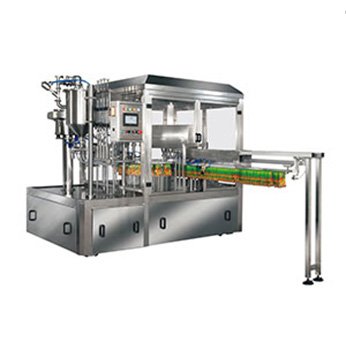
Premade pouch machines are your solution if you sell high-quality flour or require a sophisticated retail display (imagine stand-up pouches, zipper bags, or gusseted packaging). They deal with baggage that VFFS systems would find challenging or impossible.
3. Rotating Pouch Machines
Rotary prepared pouch machines meet production objectives when packing quality cannot be compromised. These multi-station systems provide tremendous throughput without sacrificing the high-end finish needed for high-end products.
4. Powder Filling Lines for Jars and Bottles
Rigid containers are frequently more effective than bags when packaging flour substitutes like baking mixes, gluten-free blends, or specialty cake premixes. The accuracy of Sembpack’s powder filling lines is maintained in both bottle and jar formats.
Frequently Asked Questions
Why does manual packaging waste so much product?
Environmental factors cause flour density to fluctuate continuously. Workers often overfill bags when scooping and weighing by hand in order to ensure that the minimum weight is met. When you fill thousands of units every month, even an additional 20 grams each bag adds up to substantial losses.
How accurate are automatic flour packaging machines?
On a 5-kilogram bag, quality systems usually reach an accuracy of ±10 grams. This implies that each package satisfies legal criteria without discarding extra merchandise.
Can I really increase production without hiring more workers?
Absolutely. 1,200 bags or more can be handled daily by a completely automated system, freeing up your staff to concentrate on quality control rather than laborious human filling. Instead of continuing labor expenses, you are only paying for the equipment once.
Why is flour dust so dangerous?
Frequent exposure to flour dust can lead to respiratory issues because it is easily released into the air. It may even create a combustion hazard at very high doses. Dust is kept at bay during the packing process by automated technologies, safeguarding your workers.
Does automated packaging actually extend shelf life?
Yes, using a variety of methods. Cleaner filling minimizes contamination, improved sealing stops moisture intrusion, and less dust exposure results in a fresher product. Longer shelf life and fewer complaints from customers are the outcomes.
How does automation improve product consistency?
Automated systems consistently produce clean bag appearance, stable weight, and high-quality sealing. After thousands of repetitions, human operators just cannot equal these standards.
Isn’t the upfront cost of automation prohibitive?
Even though the initial investment is substantial, most mills quickly recoup their costs thanks to lower labor costs, more precision (less giveaway), and fewer rejected bags. The ROI frequently shows up in the first year when you take into account the capacity to boost production without correspondingly raising costs.