
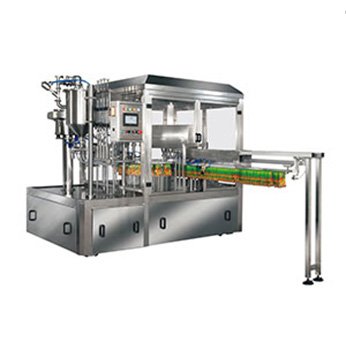

Not only the pharmaceutical and cosmetic industries, but also the food industry demand cleanliness, safety, and efficient operations as essential features.
The ampoule filling and sealing machine is a cornerstone in the packaging of sterile liquids. It prevents sensitive products such as vaccines, serums, and injectables from being tampered with or contaminated.
Well, you are a producer of disposable liquids, injectables, serums, or high-value products, and you’re thinking about the options for a packaging line. Read on.
We talk about how these machines operate, what features you should be looking for, and things to consider before you buy one or upgrade.
What Is an Ampoule Filling and Sealing Machine?
The ampoule filling & sealing machine is a key product for loading liquid and viscous pharmaceutical and cosmetic products into glass ampoules and then tightly sealing them.
These machines allow for different ampoule sizes of 1 ml to 20 ml. This means they can be used in a variety of formulations such as vaccines, essential oils, and injections.
Modern mill machinery today is sufficiently equipped with high-speed automation, servo technology, and in-line examination for fill volume and sealing malfunctions. It ensures that every ampoule exiting the production line is in accordance with regulations and the quality demanded.
How the Ampoule Filling and Sealing Machine Works
Ampoule filling and sealing stands as one of the most critical and time-sensitive steps within the liquid pharmaceutical and cosmetic industry packaging.
For each of the packaging steps, you must ensure that the product is devoid of any contaminants. Only then can you safely store or ship the product.
The following describes the process:
Feeding
You start rolling ampoules into empty glasses via the machine. This is typically done using a vibratory feeder, feeding hopper, or tray system, which simply places the ampoules upright onto the conveyor.
In the high-speed version, the indexing table is coupled with the feeding mechanism and focuses each ampoule on the workstation.
Preheating
Here, the necks of the ampoules are softly heated with gas flames or infrared heaters.
This preheating is crucial in two ways:
- It removes the moisture of gases that are left over on the glass
- It reads the ampoule tip for uniform heat-sealing.
Suitable preheating will avoid the cracking and/or deformation of glass during sealing, which occurs when the gradient is too large between neck and body.
Filling
In this phase, the liquid flow is delivered into the ampoules. Machines utilize either peristaltic pumps (for low-viscosity products) or piston pumps (for higher-viscosity solutions).
In any production process, nozzles are calibrated to dispense specific amounts of the product to minimize and control wastage.
Sterile nitrogen gas is passed into and out of the ampoules before and after product filling to remove oxygen in the course of the filling process. This is particularly important for products with a formulation stability that can be altered by oxygen, such as vaccines and serums.
Advanced queuing is done with a PLC (Programmable Logic Controller) in optimized systems. This system permits excellent volume control, and a matching fill rate to ampoule speed.
Post-filling Heating and Sealing
After filling, ampoules pass through the post-filling stage, where ampoules are loaded into the sealing chamber, and high-temperature gas flames (hydrogen or oxygen and propane) are applied.
The neck of the glass is melted, and the ampoule is sealed by drawing or turning the tip to seal the ampoule hermetically.
Sealing has two primary techniques.
- Tip Sealing: This involves pulling a sharp tip out when the opening ampoules are filled, and then the glass is sealed.
- Pull Sealing: When the ampoules are filled, this method is used to pull off the neck and tape it up. Then there’s flame calibration. If the flame is too hot, it can warp the glass, and if too cold, weak seals will shatter and become impure.
Cooling and Discharge
Ampoules are sent to a cooling tunnel after they are sealed. The machines have a controlled cooling method that prevents rapid cooling and the resulting generation of micro-cracks or internal stress in glass.
After cooling, the fluids are ejected onto trays or conveyor belts and visually examined, labelled, and reboxed.
Some other systems employ camera-based inspection to detect and verify over- or under-filling and sealing problems. This is performed prior to the amps moving on to their next production stage.
4 Types of Ampoule Filling and Sealing Machines
There are many different types of ampoule fill and seal machines available on the market, with various price points, specifications, and capabilities. For the best machine, remember to consider the batch size, product type, space, and production speed.
Well, the machine types include:
Single Head Machines
Single-head ampoule filling and sealing machines are used for low-scale production runs and are designed for laboratory applications. Depending on the viscosity of the fill material, the production rate for ampoules ranges from ten to thirty ampoules per minute adjusted by the operator.
For a given range of operational flexibility and process control, most of the units provide the flexibility range in the lower level, which is a function of the precision requirements.
For conditions requiring flexibility with sterility, precision, and slower speeds, the single-head units are more appropriate than high-speed multi-head units.
Four Head Machines
With four ampoule filling and sealing nozzles, the machines achieve an excellent balance of flexibility and efficiency, filling and sealing 60 to 120 ampoules in one minute. These machines are standard in medium-sized pharmaceutical industries, cosmetic production lines, and contract manufacturing organizations (CMOs).
Being mostly semi-automatic and fully automatic, the machines have servo parameters designed for different ampoule sizes, volumes, and flame intensities for filling and sealing.
Six or Eight Head Machines
In large production lines, six or eight-head machines are the workhorses. They can fill and seal between 200 and 400 ampoules per minute, which makes them fit nicely in high-demand pharmaceutical and biotech applications.
Through the use of PLC systems, continuous motion conveyors, SCADA interfaces, and automated inspection units, machines can produce with minimal human intervention. CIP/SIP (Clean-in-Place/Sterilize-in-Place) systems further hygienically safeguard inter-batch production changes.
Their rotary indexing systems ensure stage transfer seamlessly, preventing shuddering and spillage. This is critical in high-speed environments where precision is paramount.
Linear vs. Rotary Machines
In addition to the number of heads, an ampoule filling and sealing machine may be classified according to whether they have linear or rotary motion.
Linear machines provide individual ampoule conveyance for small to medium batching systems, which makes them easy to maintain and budget-friendly.
Rotary machines have a circular indexing motion, which maximizes space and increases production speed. They are ideal for large-scale continuous operations due to their efficiency and ability to increase throughput while minimizing mechanical wear.
Each system is simple, flexible, and robust, yet they all have their own advantages and disadvantages.
To choose between the two, the desired output, available floor space, and the intended goal will guide you.
7 Features to Consider When Buying an Ampoule Filling Machine
Machines are not all the same. The type of product you have, the regulatory requirements, and throughput will guide you on features that will need your utmost attention.
Filling and dosing precision
In the case of injectable drugs or high-value serums, even a small volumetric filling error can turn a product loss costly and lead to a non-compliance issue. The most accurate pumps provide service accuracies of +/- 0.05 percent.
So, the questions to answer are: How much of that variation is acceptable? What type of pump is in the machine? And how easily can you change the pump to fill different volumes?
Do you have the desired throughput and flexibility?
For example, some machines do have a capability of processing 24,000 containers/hour; however, if you have a large number of SKUs to manage, quickly changing flexible systems will be important. This is especially true if you have different volumes of containers (2 mL, 5 mL, 10 mL).
Material Compatibility & Sealing Technique
Sealing technology (flame, heat, ultrasonic) varies for glass and plastic ampoules. In the case of glass, the importance of inert-gas flushing, flame sealing, and precise neck centering increases.
For plastic, sealing and material integrity might be of more concern for the forming/filling/sealing process.
Hygiene, Regulatory, and Sterility Requirements
Are you working in the sterile/pharma industries? Then, does the machine integration have a clean room? How is the Laminar flow, isolator interface, CIP/SIP, validated (IQ/OQ/PQ), cGMP compliance?
Ease of Maintenance
How easy is it to adjust to different ampoule sizes? Are moulds/nozzles tool-free? Inaccessibility of maintenance is a reason for downtime and can be detrimental to ROI. Uniquely, one machine documents the change of format parts manually, with no tools.
Surveillance, Management, and Data Recording
Today, modern machines can include PLCs, touch-screens, error alarms, and data logging capability. This is more important when you begin implementing digital technology into your packaging lines.
Total cost of ownership (TCO)
Besides the purchase price, you need to factor in utilities (nitrogen, flame gas, and compressed air), maintenance, spare parts, and the risk of material loss due to downtime. Purchasing these modern machines may be costly at first, but it will decrease labour costs, and the number of rejects will be less.
Conclusion
An ampoule filling and sealing machine is a strategic machine in your packaging line. Be it pharmaceuticals, biotech, cosmetics, or specialty chemicals: the machines you choose will impact the quality of your products, compliance with regulations, operational cost, and potential growth. So, select one that meets your current requirements and your planned future development.
Work with Leading Experts in Packaging
Choosing the right machine for ampoule filling and sealing determines both your product’s quality and the success of your production.
The diversifying packaging and filling options at Sumbpack aim to meet the needs of today’s industry.
Sumbpack has the expertise and technology to assist your brand in maintaining high-quality packaging standards. Get yours today!