

As an essential product for daily and commercial cleaning, the industrial production process of dishwashing liquid must balance efficiency, quality, and large-scale production requirements. Currently, the mainstream production methods are divided into batch production and continuous blending process. The former is suitable for multi-variety, small-batch orders, while the latter meets the needs of large-scale production of a single variety. Although the two processes differ in flow, both must strictly comply with national standards and quality control systems to ensure product compliance.
Batch Production: A Traditional and Reliable Solution for Multi-Variety Production
Batch production is the most widely used traditional process in the dishwashing liquid industry. Its core feature is “batch operation” — each batch independently completes the entire process of ingredient preparation, mixing, and conditioning. Formulas can be flexibly switched between batches, making it particularly suitable for daily chemical enterprises to produce dishwashing liquid products of different fragrances, functions (such as oil-removing and bacteria-removing types), or concentrations. It is especially adaptable to small and medium-sized orders and new product trial production.
Core Production Steps
- Raw Material Preparation and Accurate Feeding
Before production, all raw materials must be inspected to ensure compliance with the national standard GB 9985-2000 and the enterprise’s internal quality requirements. First, deionized water (to avoid the impact of minerals in hard water on product stability) is injected into a stainless steel mixing tank as the basic carrier, with the water level controlled at 60%-70% of the tank capacity. Subsequently, core decontaminating ingredients — surfactants, such as AES (sodium laureth sulfate) and sulfonic acid (dodecylbenzenesulfonic acid) — are added. Among them, AES is easily soluble in water and can be directly added and stirred at room temperature; sulfonic acid needs to be heated to 40-50℃ to promote dissolution, and then caustic soda flakes (sodium hydroxide) are slowly added for neutralization reaction. During the neutralization process, continuous stirring is required to control the pH value to 6.5-7.5 (close to neutral, to avoid skin irritation and tableware corrosion). In addition, depending on the formula requirements, thickeners (such as sodium carboxymethyl cellulose and 6501 coconut oil diethanolamide) can be added simultaneously to improve the product’s viscosity and user feel.
- Constant-Temperature Stirring and Reaction Solidification
After feeding, the double-layer heating and stirring system of the mixing tank is activated to stabilize the temperature of the liquid in the tank at 50-65℃. This temperature range can accelerate the emulsification of surfactants, the dissolution of thickeners, and promote the synergistic reaction between various components. The stirring speed is controlled at 60-120 r/min, and the stirring time lasts for 30-60 minutes to ensure that the liquid is uniform without particles or stratification, forming a stable colloidal system. During this stage, the viscosity of the liquid must be monitored in real time, and the viscosity should meet the industry standard (usually 1000-3000 mPa・s, adjusted according to product positioning) by adjusting the stirring time or the amount of thickener.
- Conditioning and Post-Processing: Adding Heat-Sensitive Ingredients
When the temperature of the liquid naturally cools down to below 40℃ (to avoid damaging heat-sensitive ingredients at high temperatures), the conditioning stage begins. Preservatives (such as sodium benzoate and Kathon, added at 0.1%-0.3% to inhibit bacterial growth and extend the shelf life), fragrances (0.05%-0.2% to improve the user experience, and food-grade fragrances must be selected to ensure safety), and colorants (trace amounts, in line with GB 2760 standards, only used for appearance coloring) are added in sequence. Some functional products will also add bactericides (such as chlorhexidine) and enzyme preparations (such as lipase to enhance oil-removing effect). After adding, low-speed stirring is required for 15-20 minutes to ensure uniform dispersion of ingredients without local excessive concentration.
- Batch Inspection and Discharging
After the production of each batch is completed, samples are taken for physical and chemical index testing, including total active substance content (national standard requires ≥15%), pH value (4.0-10.5), detergency (must meet the detergency requirements of standard tableware detergents), and stability (no stratification or precipitation in high-low temperature cycle tests). After passing the inspection, impurities are removed through the filtering device (filtration accuracy 50-100μm) at the bottom of the mixing tank, and the liquid is transported to the finished product storage tank for filling.
II. Continuous Blending Process: An Efficient and Intelligent Solution for Large-Scale Production
The continuous blending process is a mainstream upgrading direction for large-scale production in the daily chemical industry in recent years. It realizes the whole-process continuous operation of raw material metering, mixing, testing, and adjustment through automated equipment, without batch intervals. Its production efficiency is 3-5 times that of batch production, making it suitable for large-scale production of a single formula with an annual output of over 10,000 tons (such as regular dishwashing liquid of mainstream brands).
Core Production Steps
- Multi-Level Accurate Metering: Zero Error in Raw Material Conveyance
All raw materials (deionized water, surfactants, caustic soda flakes, thickeners, etc.) are stored in dedicated storage tanks and connected to the intelligent metering system through pipelines. Bulk raw materials such as water and AES are metered using flow meters with an accuracy error of ≤±1%; trace raw materials such as caustic soda flakes and preservatives are metered using weighing-type metering pumps with an accuracy error of ≤±0.5%. The metering system is linked with the central control system (PLC), which automatically adjusts the conveying volume of each raw material according to the preset formula to ensure accurate proportioning and avoid errors in manual feeding.
- High-Speed Screw Mixing and Online Testing: Real-Time Monitoring of Key Indicators
The metered raw materials are simultaneously fed into the high-speed screw mixer, which is equipped with spiral blades and shearing devices inside, with a rotating speed of up to 3000-5000 r/min. It can instantly complete the mixing, neutralization, and homogenization of raw materials — sulfonic acid and caustic soda flakes are quickly neutralized under high-speed shearing, and surfactants and thickeners are fully emulsified. No additional heating is required, and the slight heat generated by shearing can promote the reaction. The mixed semi-finished products then enter the online testing unit, where sensors monitor key parameters such as viscosity, pH value, and total active substance content in real time. The data is synchronously transmitted to the central control system to form a closed-loop feedback.
- Secondary Mixing and Finished Product Control: Fine Adjustment to Meet Standards
Based on the online testing data, the central control system automatically calculates the deviation value. If the pH value is too high, a small amount of citric acid is added; if the viscosity is insufficient, additional thickener is added. These adjusting ingredients are injected into the second-stage mixer (low-speed stirring to ensure uniform mixing) through the accurate metering device. The finished products after secondary mixing are rechecked by the testing unit, and after passing the inspection, they enter the finished product buffer tank; if they fail to meet the standards, they are returned to the first-stage mixer for reprocessing until they meet the standards. Finally, the discharge volume is counted through the flow metering device, and a 5%-10% circulation volume is set to ensure the continuous and stable operation of the system and avoid material shortage or backlog.
III. Filling, Packaging, and Whole-Process Quality Control: A Closed-Loop Management from Finished Products to Warehousing
1. Finished Product Filling and Packaging
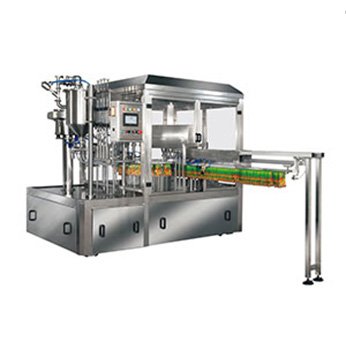
The qualified dishwashing liquid in the storage tank is transported to the filling workshop through sterile pipelines. Different types of filling machines are used according to product specifications (such as 500ml, 1L, 5L): automatic piston filling machines are used for small-volume bottles, with a filling accuracy of ≤±2ml and a speed of 60-120 bottles per minute; weighing-type filling machines are used for large-volume barrels, with an accuracy of ≤±5g. After filling, the products go through a capping machine (for screw caps) or a pump pressing machine (for press pumps), a labeling machine (to attach product labels, indicating ingredients, shelf life, production batch number, etc.), a shrink film machine (for outer film packaging), and finally, a cartoning machine completes the cartoning and transports the products to the finished product warehouse.
2. Whole-Process Quality Control System
The production of dishwashing liquid must strictly comply with the national standard “GB 9985-2000 Detergents for Hand-Washing Tableware”, and quality control runs through the entire process:
- Raw material inspection: All incoming raw materials must provide a certificate of conformity, with a focus on testing the active substance content of surfactants, the purity of preservatives, and heavy metal residues (such as lead and mercury);
- In-process inspection: For batch production, each batch is tested at least twice (during the middle of stirring and after conditioning); for continuous production, sampling and testing are conducted once per hour to ensure the stability of key indicators;
- Finished product inspection: Each batch of finished products must undergo a full-item inspection, including detergency test (using standard oil-stained carriers), microbial limit (total bacterial count ≤1000 CFU/g, mold and yeast count ≤100 CFU/g), and fluorescent whitening agent (not detected). Only after passing the inspection can the products be put into storage;
- Traceability management: Each batch of products is marked with a unique production batch number, which is linked to the raw material batch, production equipment, and testing data to realize traceability of quality problems.
Conclusion
Batch production and continuous blending process respectively meet the production needs of “multi-variety, small-batch” and “single-variety, large-scale” in the dishwashing liquid industry. The former is flexible and controllable, suitable for small and medium-sized manufacturers and new product development; the latter is efficient and intelligent, and is the core choice for leading enterprises in large-scale supply. Regardless of the process adopted, strict raw material selection, accurate formula control, and whole-process quality monitoring are the keys to producing qualified dishwashing liquid. With the pursuit of environmental protection, efficiency, and functionality in the daily chemical industry, future processes will further upgrade towards “low carbonization (such as reducing energy consumption), intelligence (such as AI-optimized formulas), and greenization (such as the application of degradable raw materials)”.